This year, to help us connect with Harvest and how it points to Christ, we spoke with three people whose work is tied to the land to hear their reflections on this season. Through their reflections, James Cole, a farmer from Chippenham, Stephen Tuck, a farmer from Swindon, and Revd John White, leader of Hazelnut Community Farm, share how their work has impacted their faith and helped them to recognise the presence of Jesus in their daily lives.
James Cole, Farmer, Chippenham
James is an arable and livestock farmer based in Chippenham. He grew up on a farm and started farming around 30 years ago.
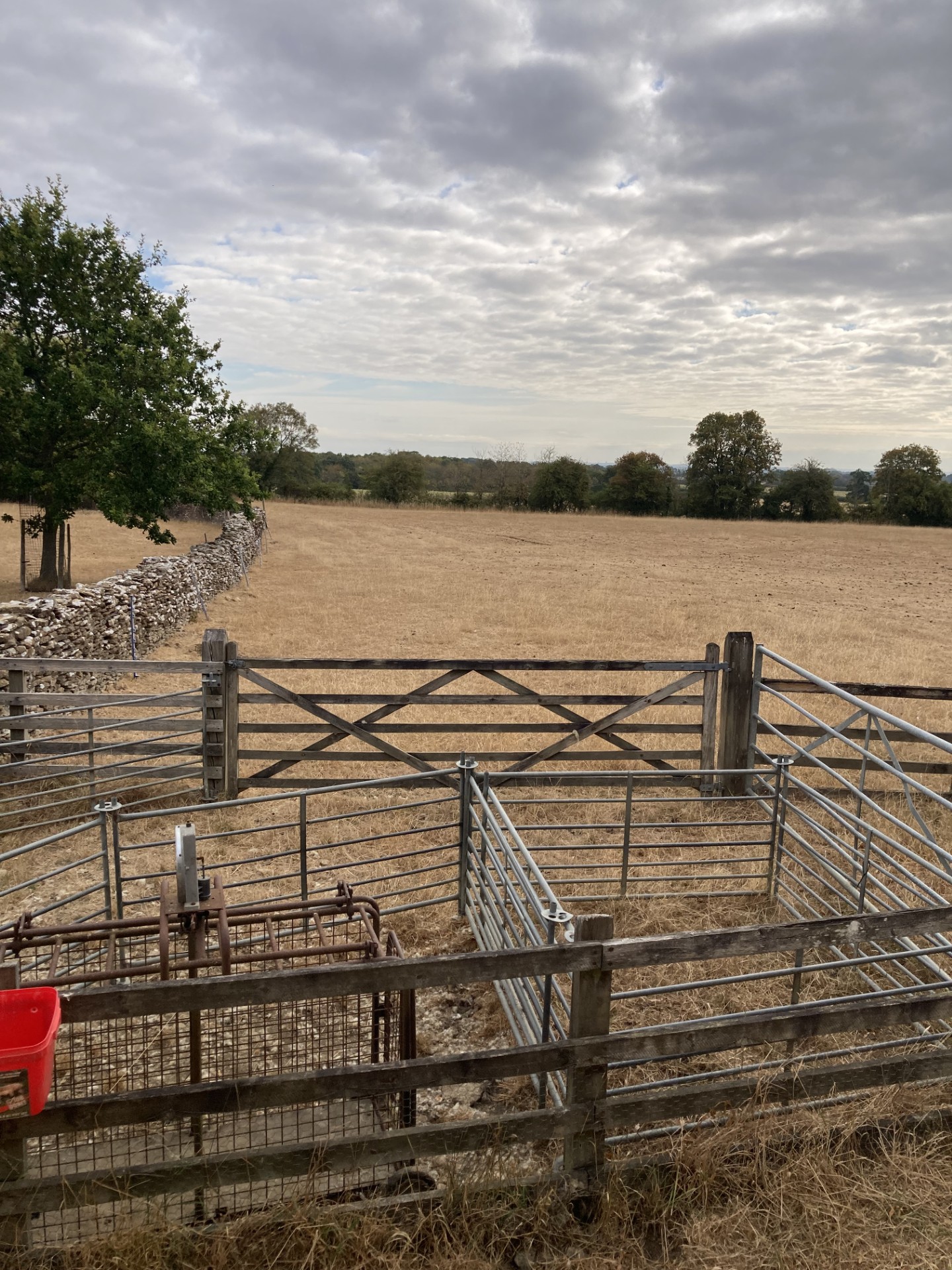
James reflection on Harvest:
As I write this, I’ve just jumped off the tractor having finished drilling (planting) a field of linseed. It’s strange thinking about our harvest that finished in July this year, when we’re well into the busy planting season for next year’s crops. However, our harvest festival is not based on our farming practices but on the Jewish Feast of Tabernacles (temporary dwellings), which Jews in Israel and around the world are celebrating as I write.
This feast is also known as the Feast of Ingathering and is their third harvest festival of the year. The other two are Firstfruits, celebrated during Passover and the Feast of Unleavened bread, and the Feast of Harvest, better known to us as Pentecost. It is a great time of celebration, rejoicing, and thanksgiving as they remember the LORD’s gracious provision for them in the wilderness as they journeyed to the promised land and His sustaining hand on them over the past year. The first harvest festival marks the first fruit of the barley harvest, the second, the wheat harvest, and this feast - the final ingathering of the fleshy fruits, the olives and the grapes. The feast is also prophetic as it looks forward to the time when the LORD’s dwelling will be with His people.
It’s interesting to note that they are commanded to rejoice. Whatever the highs and lows, the trials and successes, the joys and sadness, the LORD has been faithful in bringing them through another year - after all, every breath in our lungs is a gift from Him.
This year for us on the family farm has not been easy. The drought led to a significant drop in yields (the third out of four years with a below average harvest). It also meant we have been feeding the livestock their winter rations since mid-July, which will probably mean having to source more feed, no doubt at significantly increased prices.
I guess it’s obvious, but without water nothing grows! As I watched the grass slowly dying off, I was reminded of three passages in the Scriptures that involved drought (or famine).
Israel endured three years of drought before David thought to seek the LORD. Not wanting to make the same mistake, I had to ask the question: What are you saying, LORD? The answer, I believe I discerned, was to remember our complete dependence on Him. Living independently of Him is sin. I wonder if this is a message for us as a nation as well as for us as individuals?
The prodigal son, having made a lot of poor choices, was ultimately brought to his senses by a famine (most likely caused by drought). It caused him to have a rethink, but he didn’t just have a rethink and remain where he was; he returned to his father, leaving the place where he was, and he sought to put things right - to restore. Re-think, re-turn, re-store… the essence of repentance.
Context is important, but I was also reminded of part of Habakkuk’s prayer. Though the fig tree does not bud, and there are no grapes on the vines, though the olive crop fails and the fields produce no food, though there are no sheep in the pen and no cattle in the stalls, yet I will rejoice in the LORD; I will be joyful in God my saviour.
So, a lesson I have learnt through a difficult farming year is a reminder that I can do nothing without Him. He is the one who sustains and saves me. It’s a privilege to have the opportunity to re-think and to turn again from independence to dependence on my loving Heavenly Father, who does not desire that any should perish but that all should reach repentance. And Habakkuk’s prayer encourages me, no matter what the future holds, to make the choice to rejoice in the abundant goodness of God, just as my Jewish friends are doing as they celebrate their feast.
Stephen Tuck, Farmer, Swindon.
Stephen grew up on a Family farm which sits in the parishes of Brinkworth & Lydiard Tregoze. His farming involves producing apple juice and raising beef cattle.
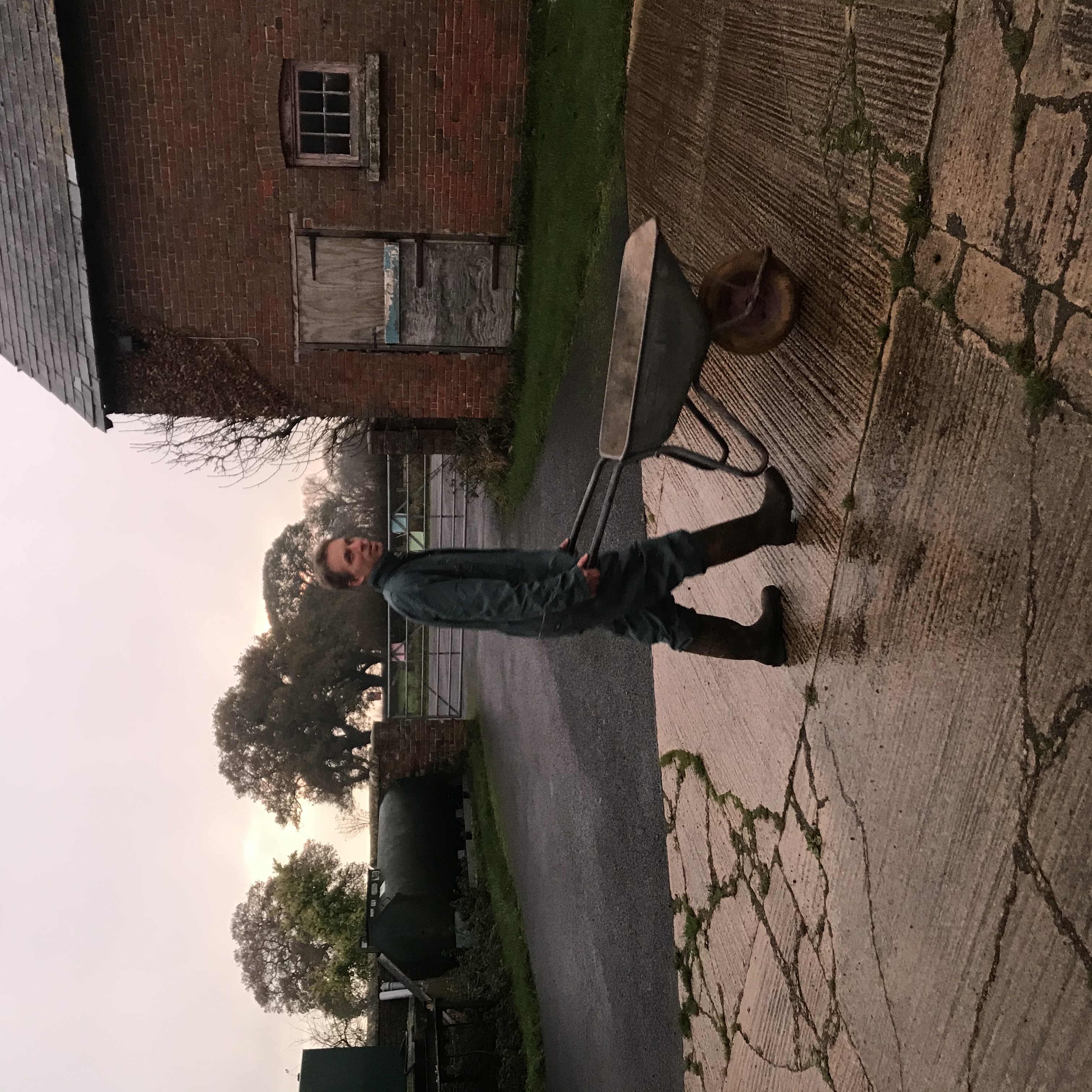
Stephen’s reflection on harvest:
After studying agriculture at Nottingham University, I spent a year in New Zealand in 1998-1999, where I experienced a summer much like the summer we have just experienced, however, the farm did have reservoirs for irrigation. Whilst I was there, I met the hymn writer Shirley Erena Murray, who wrote the hymn below.
Touch the earth lightly,
use the earth gently,
nourish the life of the world in our care:
gift of great wonder,
ours to surrender,
trust for the children tomorrow will bear.
We who endanger,
who create hunger,
agents of death for all creatures that live,
we who would foster
clouds of disaster,
God of our planet, forestall and forgive!
Let there be greening,
birth from the burning,
water that blesses and air that is sweet,
health in God's garden,
hope in God's children,
regeneration that peace will complete,
God of all living,
God of all loving,
God of the seedling, the snow, and the sun,
teach us, deflect us,
Christ reconnect us,
using us gently and making us one.
Harvest for me is making apple juice for individuals from their own apples. Last autumn there were bumper crops of apples, yet this year there are not many apples, as the hot weather meant some trees shed their apples in the summer.
The farm is all permanent grass which is used to make hay & is grazed by our beef cows & calves. "Touch the earth lightly" means housing cattle during wet conditions. Due to the drought conditions, we have been feeding hay to the cows all summer.
The first two verses can make you feel helpless at the destruction of crops and food by conflicts and natural disasters, which are made worse by climate change.
The third verse gives hope that next year the fields will not be bare & the trees will bear fruit. That peace can come & destruction can be stopped.
The final verse should encourage us that we should all work together to look after our planet with God's help.
Revd John White, lead, Hazelnut Community Farm
John is an Anglican priest and founder of Hazelnut Community Farm in East Bristol. Hazelnut is a worshipping community built around the connection between Creator, creation and community.
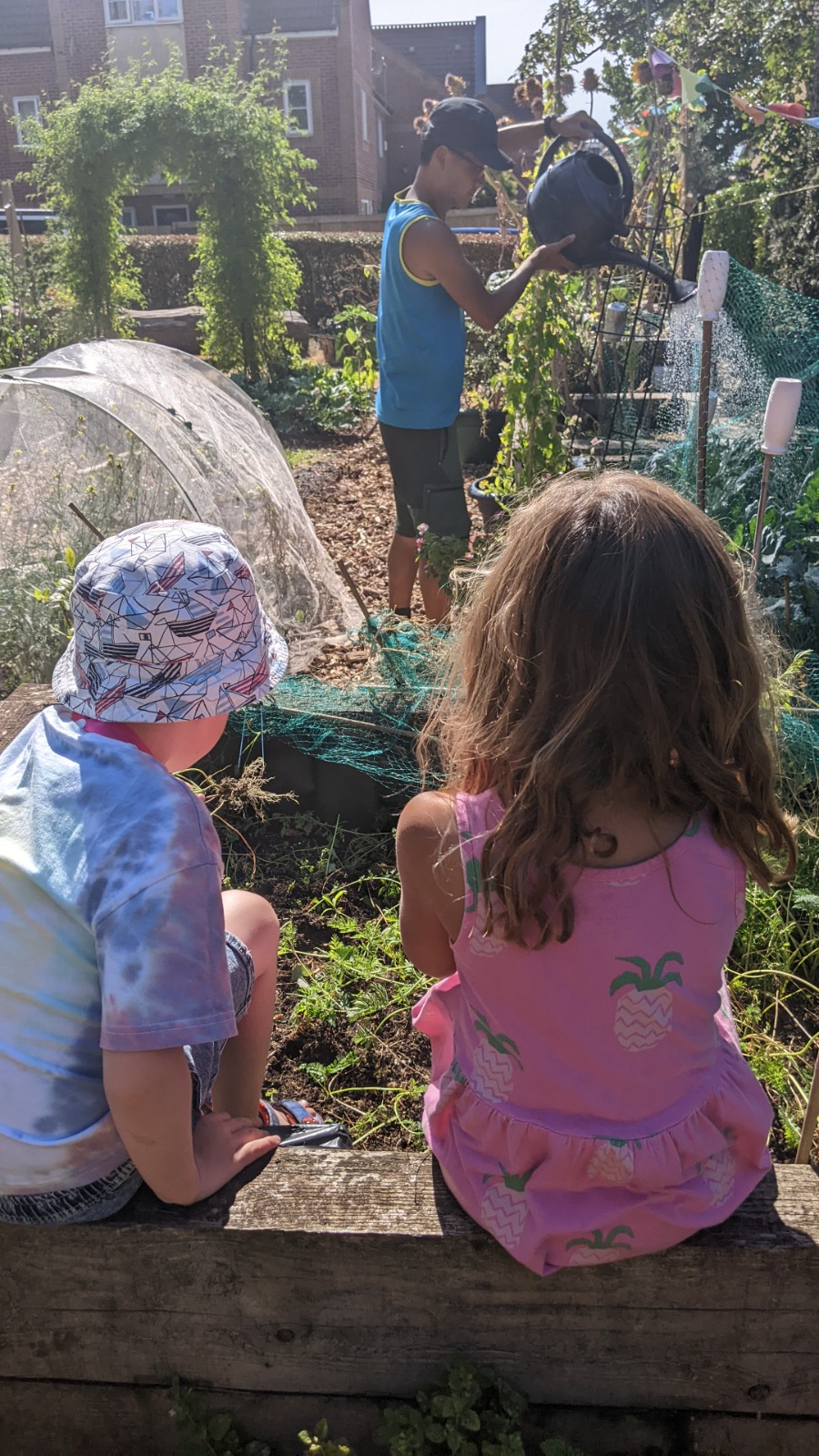
John’s reflection on harvest:
Hazelnut really began during my curacy. I was increasingly wrestling with what it means to be the Church in a time of climate emergency and ecological breakdown. I felt we needed places where we could actually try things, learn from them, and then gift that learning back to the wider Church.
One of the questions that really shaped me was: what would happen if we treated God’s creation as a member of our church?
That question changed quite a lot for me. Rather than creation being something we occasionally talked about or prayed for, what if the soil, weather, and changing seasons actually shaped the life of our community?
We started experimenting with that, and what has grown from it has been so much more than I could have imagined.
Lots of the ways I experience God through my work have involved learning to pay attention.
Growing food forces you to notice things. You notice when the rain hasn’t come. You notice the first shoots appearing. You notice what is struggling and what is thriving. You learn pretty quickly that you are not in control.
I think that has changed how I experience God. Faith becomes less about escaping from the world and much more about being present within it.
There is something deeply spiritual about putting your hands in the soil, eating food you have grown with other people, or simply noticing the first signs of a new season. Creation isn't the backdrop to our life with God. It is part of it.
Leading this community has impacted my faith much like a slow conversion.
Harvest itself captures some of this. You can do all the work of preparing the soil, planting, watering, and tending, but ultimately, you cannot make a seed grow.
There is something humbling about that.
And then you get to harvest something that began as this tiny seed, put it on a table, and share it with other people. There is abundance, gratitude, and dependence all mixed together.
Working with the land has helped me rediscover that much of the language of our faith comes from this world: seeds, soil, fruit, water, wilderness, seasons, death and new life. These aren't just nice metaphors. They are things we can touch and taste and participate in. And I think I understand Jesus differently because of that.